
BEST PRACTICE
What makes
a good question?
12 Checks for Writing Smarter Reader Polls
Good polls don’t just ask questions. They frame the debate.
A strong poll highlights what’s at stake in a topic, makes readers pause, think, and want to weigh in.
We’ve reviewed millions of poll questions across publishers like The FT, The Times of London, and Yahoo.
This guide shares 12 clear checks to help editors write sharper questions, surface better angles and drive meaningful engagement.
If you use polls in your editorial workflow, this is the framework to work from.
BEST PRACTICE
What makes
a good question?
12 Checks for Writing Smarter Reader Polls
Good polls don’t just ask questions. They frame the debate.
A strong poll highlights what’s at stake in a topic, makes readers pause, think, and want to weigh in.
We’ve reviewed millions of poll questions across publishers like The FT, The Times of London, and Yahoo.
This guide shares 12 clear checks to help editors write sharper questions, surface better angles and drive meaningful engagement.
If you use polls in your editorial workflow, this is the framework to work from.
PART I: Writing Questions
1. Get to the core.
To write an engaging question, it is best if you address the essence of a current debate.
Ask yourself whether your question deals with the most important aspect of the topic or if is there is a bigger picture that should be addressed.
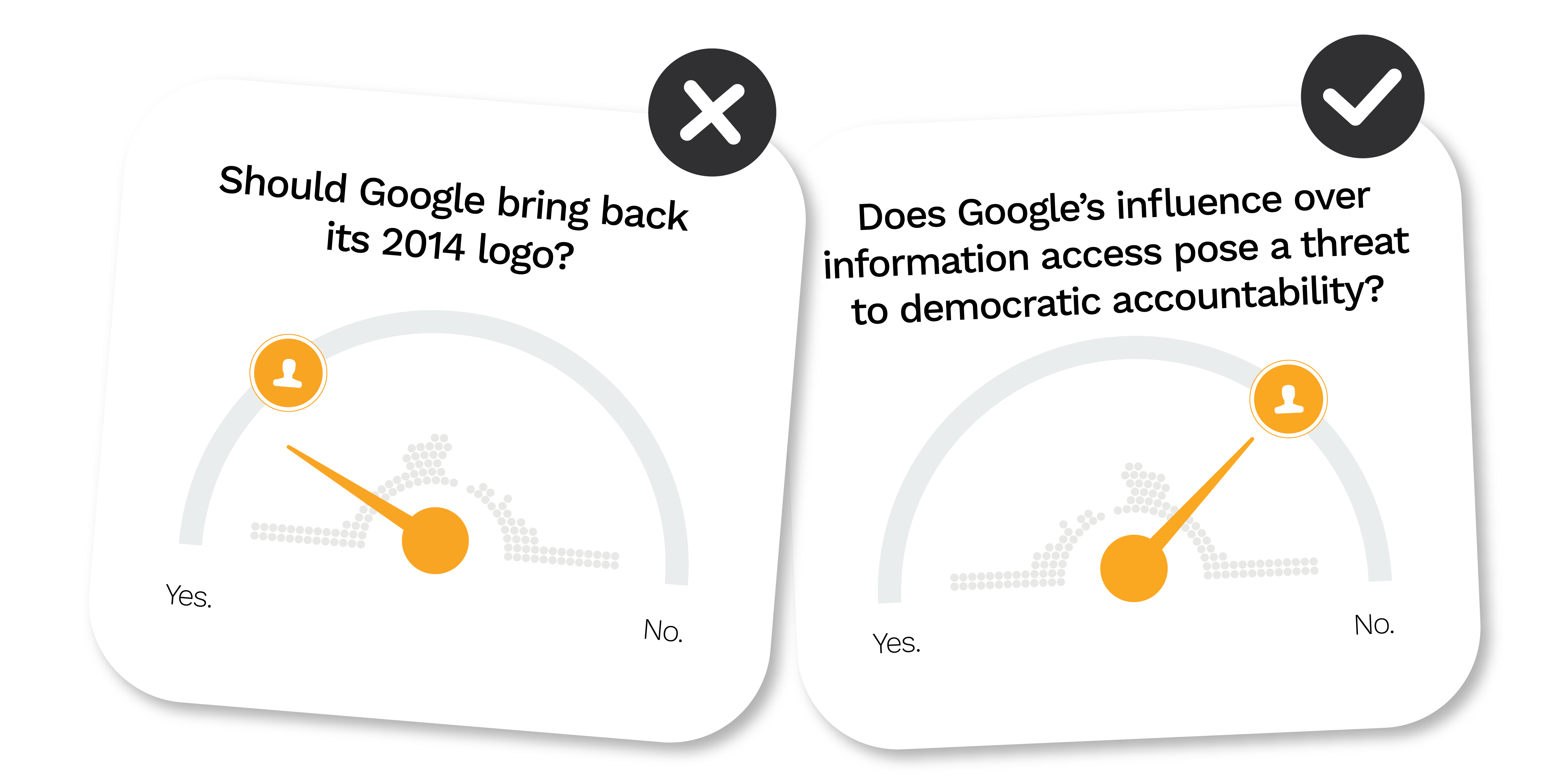
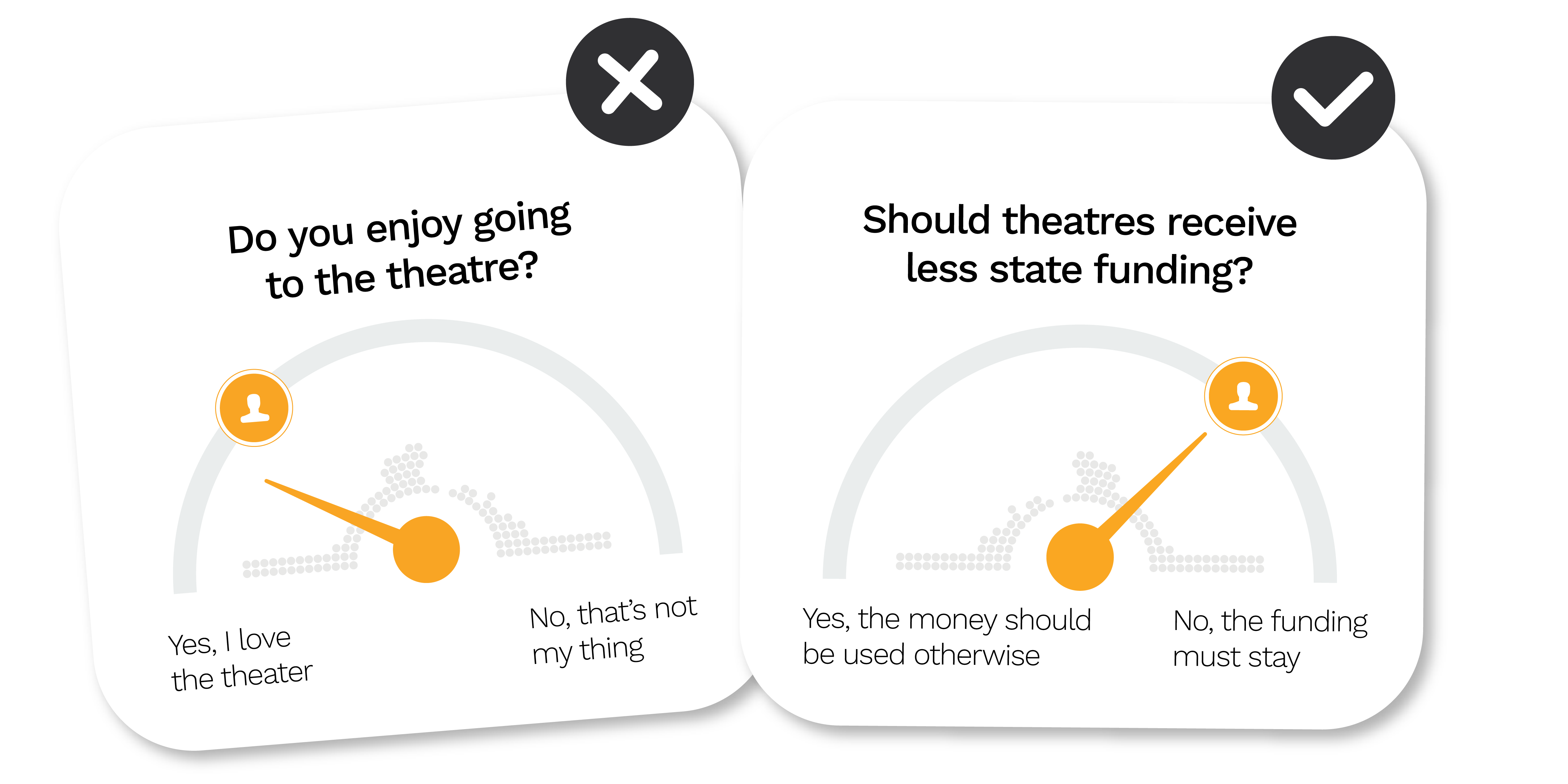
2. Make it interesting.
Is the question you pose interesting for your audience? Great! An interesting topic will gain much more attention than an average one.
We know, not every topic is inherently exciting.
But every topic has an interesting angle to it. It’s worth looking back at the debate you talk about and considering which point of it could also create interest within your audience.
WANT TO LEARN MORE?
See what works
(and what doesn’t).
Fill in your details to unlock the complete guide.
PART I: Writing Questions
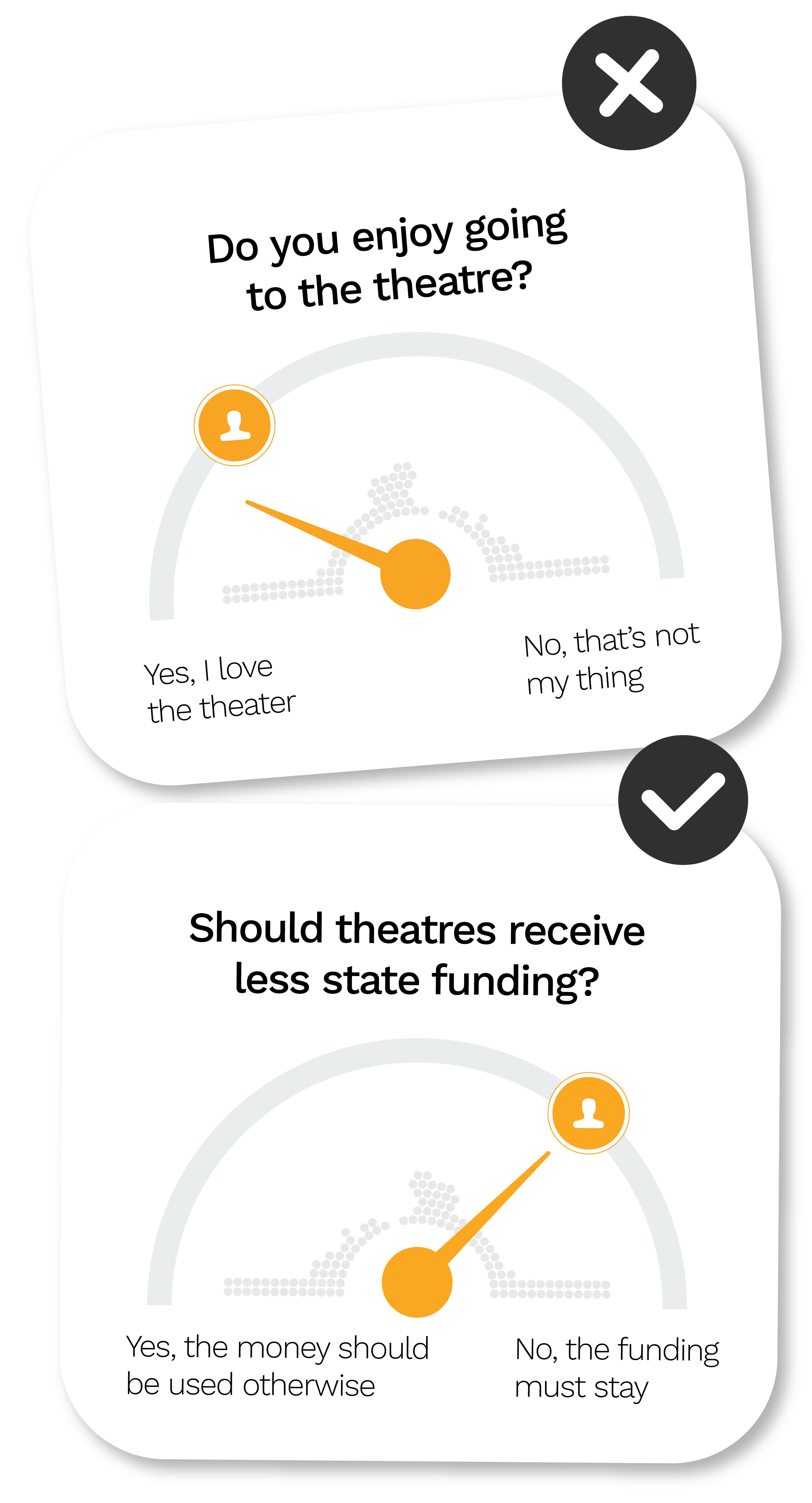
1. Get to the core.
To write an engaging question, it is best if you address the essence of a current debate.
Ask yourself whether your question deals with the most important aspect of the topic or if is there is a bigger picture that should be addressed.
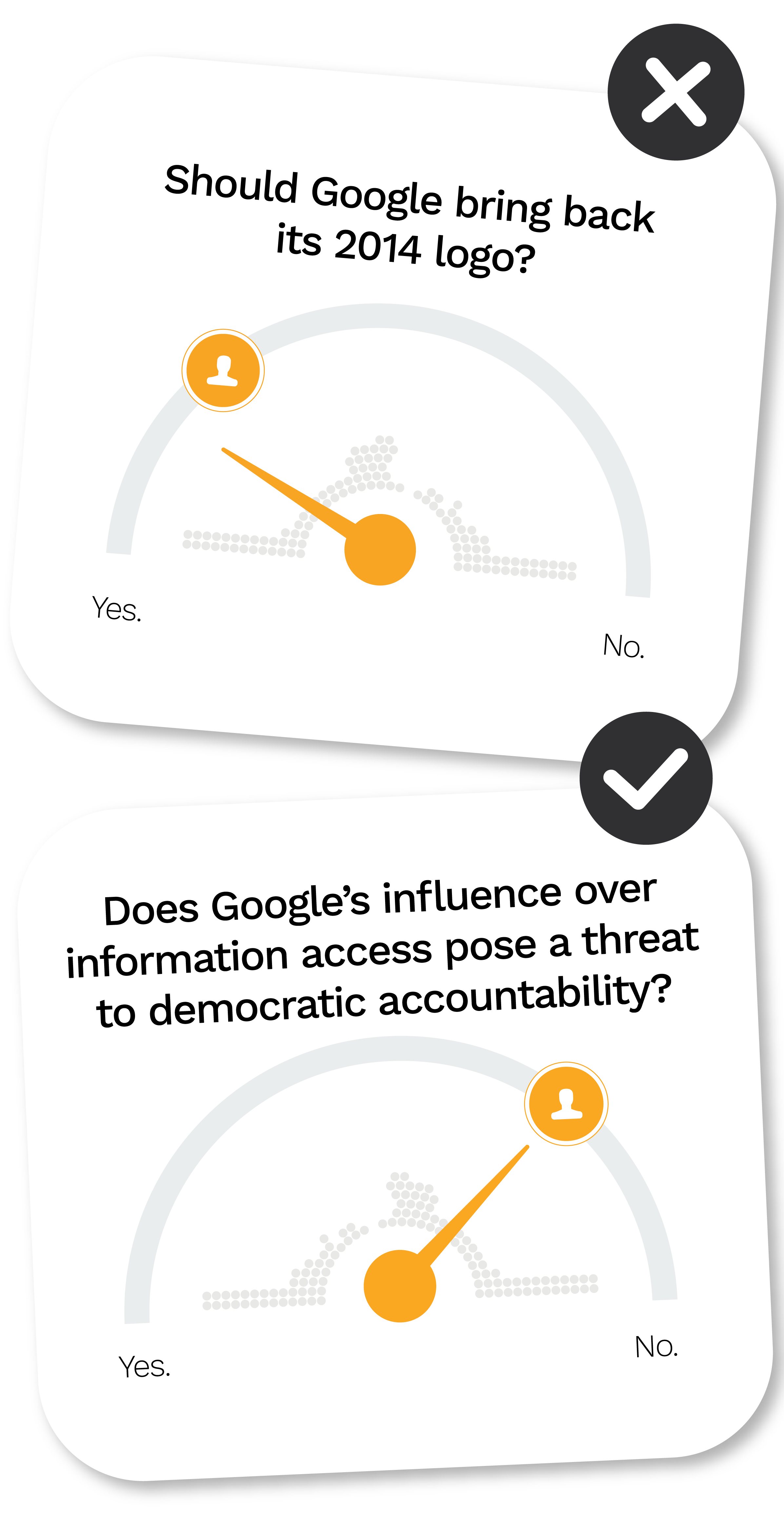
2. Make it interesting.
Is the question you pose interesting for your audience? Great! An interesting topic will gain much more attention than an average one.
We know, not every topic is inherently exciting. But every topic has an interesting angle to it. It’s worth looking back at the debate you talk about and considering which point of it could also create interest within your audience.
WANT TO LEARN MORE?
See what works
(and what doesn’t).
Fill in your details to unlock the complete guide.